
Pubs, cafés and trading spaces in Tadcaster
Tadcaster sits on the River Wharfe between York and Leeds, and people well outside Yorkshire know it for brewing. The centre is mostly older stone buildings with pubs, cafés, shops and small firms in them, and housing spreads out around that. For anyone running a bar or a shop here, the brief tends to be the same. Keep customers and staff comfortable when the place is full, and don’t make a racket or spoil the look of the building doing it.
A tearoom and a lounge bar overheat for different reasons, so we look at how the room is actually used before suggesting anything.
Bars and lounges
Heat builds with every extra customer. Systems need headroom for a full room, with airflow kept off tables and the bar.
Cafés and tearooms
Coffee machines, ovens and sunny front windows all add heat. Quiet indoor units keep conversation easy.
Small shops
A shop window facing the sun can make the front of the store uncomfortable while the back stays cool.
Offices above shops
Upper-floor rooms in older buildings often trap heat under the roof and suit a compact wall unit.
How do you stop cold air blowing on customers?
Mostly by putting the unit in the right place and setting the louvres properly. We position indoor units so the air travels along the room, not straight down onto tables, seating or the till. Modern units let you fix the louvre angle or set a gentle swing. In a long, narrow bar, two smaller units at either end usually feel more even than one big one blasting from a single wall.
Sizing for a full room
Every person in the room gives off heat. A bar that’s fine at lunchtime can be stuffy by nine on a Friday. So we ask about normal and peak numbers, kitchen kit, lighting and glazing, and size for the peak. The commercial air conditioning page explains how we plan for customer-facing spaces.
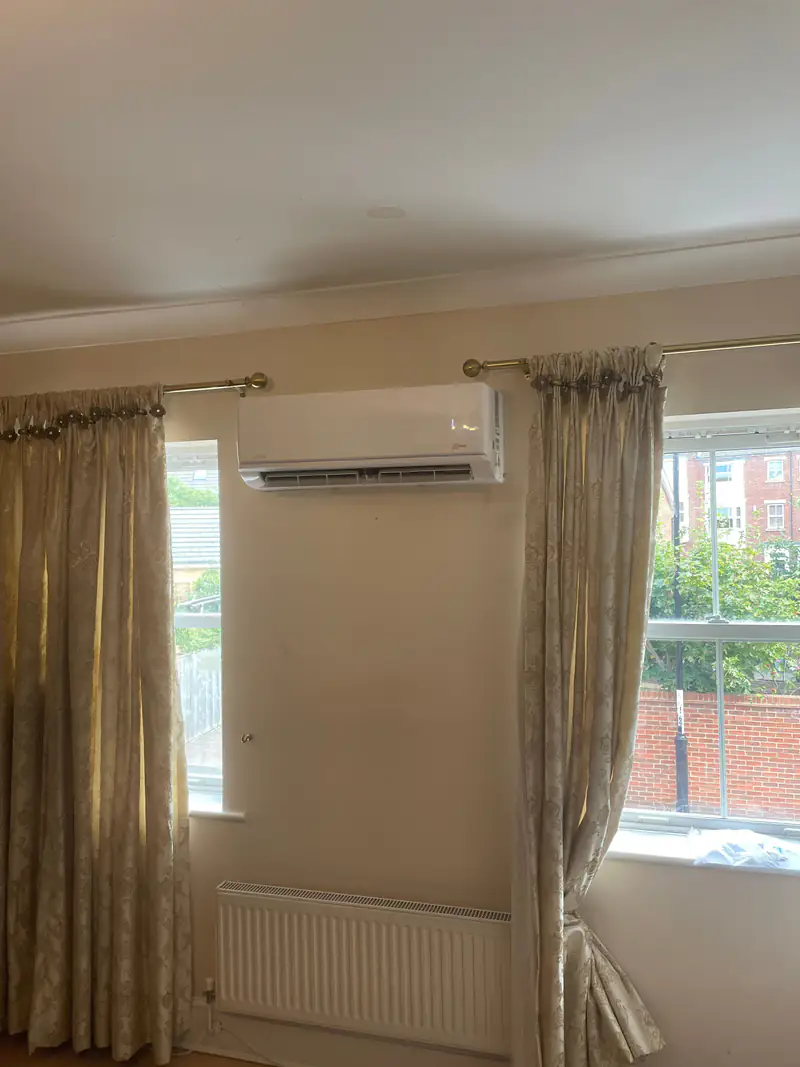
What does commercial air con involve for a small hospitality business?
For most small pubs, cafés and shops it means one or more split systems. Each has an indoor unit in the trading space and an outdoor unit in the yard, on a back wall or up on a flat roof. Bigger rooms might use ceiling cassettes or ducted units, and where outside space is tight several indoor units can share one outdoor unit.
- Wall-mounted split
- Simple, good value and easy to service. Suits smaller rooms with decent high wall space.
- Ceiling cassette
- Sits flush in a suspended ceiling and spreads air four ways. Good for larger open rooms with a ceiling void.
- Ducted unit
- Hidden above the ceiling with only grilles on show. The most discreet option, if the void is deep enough.
- Floor console
- Sits low on the wall like a radiator. Handy in rooms with beams, low ceilings or panelling.
- Multi-split
- Several indoor units on one outdoor unit, which saves space in a crowded yard.
- SEER and SCOP
- Seasonal efficiency ratings for cooling and heating. Higher numbers mean lower running costs for the same output.
Anyone installing, servicing or repairing a system with fluorinated refrigerant in it has to hold the appropriate F-Gas certification, so ask to see it. Some larger commercial systems also need periodic leak checks, depending on how much refrigerant they hold.
Drilling through limestone and other solid walls
A lot of Tadcaster’s older buildings are local limestone, with thick solid walls and fairly small windows in places. Those walls keep the inside cool for the first few days of a warm spell, then hold on to the heat once they’ve warmed through. They also need care when you’re getting pipework through them.
Plan the route first
We agree exactly where the core hole goes before drilling, looking for the shortest route that avoids decorative stonework, lintels and the street frontage.
Choose the right drilling method
Thick stone is core-drilled with the right kit, giving a clean hole and disturbing as little of the surrounding masonry as possible.
Sleeve and seal
The hole is sleeved and sealed so the pipes are protected and the wall stays weathertight.
Neat external runs
Outside, the pipes run in trunking that sits quietly against the wall, following corners or downpipes where we can.
Fewer holes, better results
On a stone building, put the indoor unit on an outside wall close to where the outdoor unit will go. A short run means fewer holes and a neater job.
Brewing-town buildings and heritage consent
Much of the centre is historic, so heritage tends to come up. Air conditioning is usually possible. It’s the outdoor unit and any pipework on show that need thinking about.
Who to ask
Tadcaster is in the North Yorkshire Council area, and its planning team deals with listed building consent and conservation area questions. Homes may fall under permitted development, subject to conditions. Commercial premises and listed buildings are more likely to need an application, and tenants will usually need the landlord’s say-so as well.
Keeping units out of sight
Back yards, enclosed courtyards and flat roofs behind a parapet are normally the most discreet spots. We steer clear of street-facing walls where we can, and if a position looks likely to need consent we’ll tell you at the survey, before you’ve committed. The same thinking applies across the older parts of Wetherby and the city centre in York.
Kitchens, cellars and back-of-house heat
Front of house gets the attention. The rooms working hardest are often out the back.
Commercial kitchens
Cooking throws out a lot of heat and greasy air. Kitchen ventilation and extraction is its own specialism, but air conditioning can make the prep and wash-up areas more bearable. Anything near a kitchen needs its filters and coils cleaned more often, which is where a proper air conditioning maintenance schedule earns its keep.
Positioning near cooking
Keep indoor units out of direct cooking fumes, and make sure they don’t blow across hot food or gas burners.
Beer cellars
Cellar cooling is specialist work with dedicated equipment built to hold a steady low temperature. It isn’t the same as comfort air conditioning. If you’re thinking about the cellar as well as the bar, mention it at the survey and we’ll be straight with you about what our work covers.
Staff rooms and offices
A small office or staff room upstairs is an easy win. One compact wall unit keeps it comfortable through summer and heats it cheaply in winter, much as we’d do for a study at home. The office air conditioning page has more on sizing.
Tadcaster homes: cottages, terraces and newer estates
Away from the centre you’ll find stone cottages and terraces as well as newer estates. How we go about it depends on the house.
- Stone cottages: short pipe routes, a rear or courtyard spot for the outdoor unit and drilling points agreed carefully
- Terraces: the outdoor unit usually goes in the back yard, kept off shared walls and away from next door’s windows
- Newer homes: cavity walls make it straightforward, and extensions and loft bedrooms are the usual problem rooms
- Riverside properties: where the garden has been wet before, a wall bracket keeps the outdoor unit up off the ground
The domestic air conditioning and bedroom air conditioning pages go through system choices for homes, and the installation page explains what happens on the day.
Maintenance plans that suit opening hours
For a business, the worst time for the air con to pack up is a hot Saturday with a full room. Regular maintenance makes that less likely, and we can book visits around your trading hours.
| Space | Suggested frequency | Why |
|---|---|---|
| Home bedroom or office | Once a year | Light use and clean air |
| Shop or quiet café | Once or twice a year | Moderate hours and some dust from foot traffic |
| Busy pub or bar | Twice a year or more | Long running hours and heavy occupancy |
| Near a kitchen | Every few months | Grease and dust clog filters and coils quickly |
A service covers the filters, indoor and outdoor coils, fan, condensate drain, electrical connections, operating pressures and temperatures, and a test of the controls. Running costs come down to hours and tariff. As an illustration, a bar unit drawing 1.5 kW for eight hours at 25p per kWh would cost about £3 that day. If something’s already gone wrong, see air conditioning repairs. We also work in Sherburn in Elmet and Copmanthorpe.