
Living by the Derwent: what it means for air con
Stamford Bridge is a village on the River Derwent east of York, best known for the battle of 1066. These days it’s a popular place to live. There are older properties near the river and the village centre, and newer family homes on the streets round about.
Living by a river changes how a house feels in summer. River valleys get a lot of still, muggy days, and rooms end up clammy as much as hot. A split system helps with both, because cooling pulls moisture out of the air as well.
Humidity and dry mode
Most split systems have a dry or dehumidify mode. It runs the indoor coil cold with the fan on low, taking moisture out of the air without chilling the room much. On a close day that can make a living room or bedroom far more pleasant. The water drains away through the condensate pipe.
What it won’t do
It won’t sort out damp. If an older riverside house has rising or penetrating damp, get that dealt with properly first, and don’t rely on a split system to mask it.
Outdoor units in low-lying gardens
If the garden is low-lying or close to the river, mount the outdoor unit on a raised base or a wall bracket, not straight on the ground, so it stays clear of standing water and debris. We’ll look at the site and suggest a sensible spot at the survey.
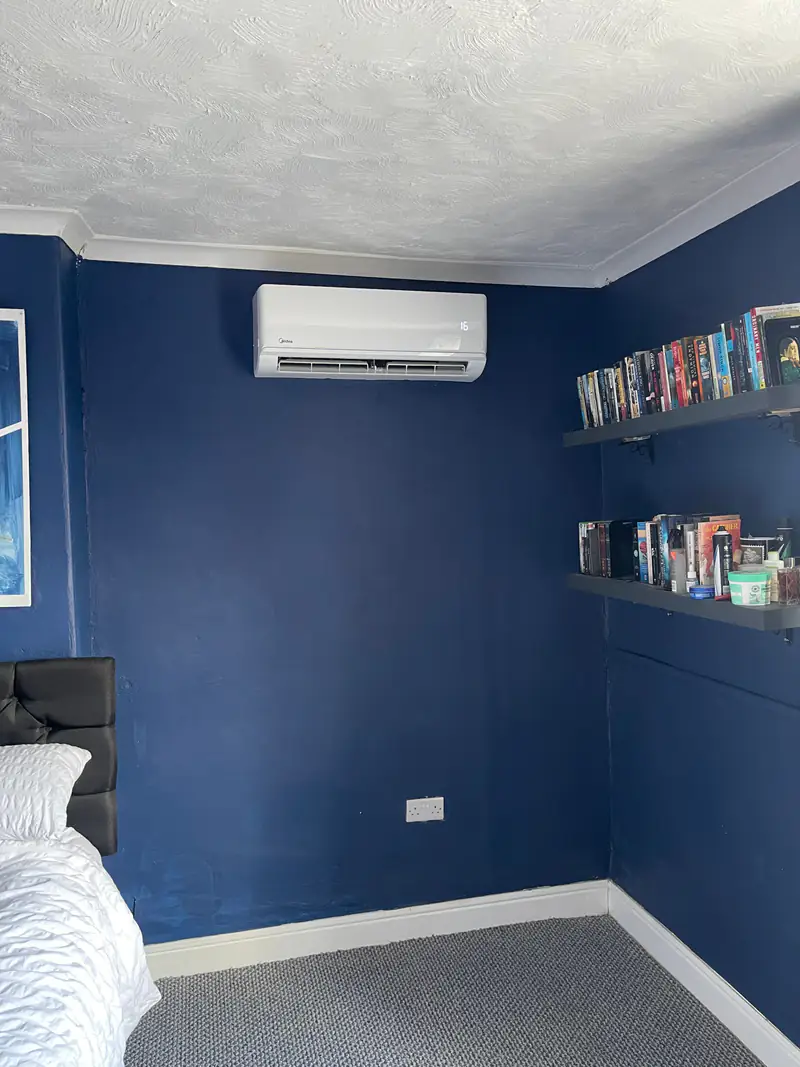
Turning a Stamford Bridge conservatory into a year-round room
Plenty of family homes in the village have a conservatory or garden room, and that’s often the room that most needs help. It’s a greenhouse on a sunny afternoon and too cold to sit in come winter. A correctly sized reverse-cycle unit sorts out both.
Sizing for glass
A conservatory needs more capacity per square metre than an ordinary room, because glass lets in so much sun and loses so much heat in winter. The roof makes a big difference. A solid or insulated roof needs less capacity than polycarbonate or glass.
| Facing | Summer | Winter | Sizing note |
|---|---|---|---|
| South | Very hot from late morning | Pleasant on sunny days, cold at night | Highest cooling capacity |
| West | Hot in the afternoon and evening | Cold mornings | Plan for evening peak |
| East | Warm early, cooler by afternoon | Slow to warm up | Moderate capacity |
| North | Generally comfortable | Coldest orientation | Heating performance matters most |
Where the indoor unit goes
Usually on the solid house wall inside the conservatory, since frames and glazing can’t take the fixings. There’s more on our conservatory air conditioning page.
Which rooms overheat first in a village family home?
Conservatories and top-floor bedrooms go first, then kitchen extensions with rooflights and whichever room is being used as an office. Here’s what drives each one.
Conservatories and garden rooms
Lots of glass and little thermal mass, so the temperature climbs fast in sunshine and drops fast at night.
Top-floor bedrooms
Warm air rises and the roof heats up all day, so these rooms are often at their warmest at bedtime. See bedroom air conditioning.
Kitchen extensions
Rooflights, bifolds and cooking together make an open-plan kitchen hard work on a summer evening.
Home offices
Computers and screens in a small room with the door shut add steady heat all through the working day.
Most people start by treating one or two of these rooms. It’s the usual way into domestic air conditioning.
One outdoor unit or several?
For more than one room, you can fit a separate single split in each, or connect several indoor units to one multi-split outdoor unit. Both work. Which suits you depends on the house and how you live in it.
When separate systems make sense
Separate systems keep every room independent, so if one unit needs attention the rest carry on. They suit rooms on opposite sides of the house, where pipes to a shared outdoor unit would have a long way to go. You can also add them one at a time as budget allows, which is how a lot of air conditioning installations in the village start out.
When a multi-split is neater
With a multi-split you get one outdoor unit instead of two or three. That matters in a smaller garden, or if you’d like to keep the back of the house clear. It works best when the rooms are fairly close together, say two bedrooms and a landing study on the same floor. Newer homes in Pocklington often suit the same approach.
What affects the cost
- Number of indoor units and their capacities
- Total pipe run length and how the pipes are routed through the house
- Wall construction and any work at height
- Electrical work, including a dedicated circuit and isolator
- Condensate routes for each indoor unit, and any making good
Sound levels and good neighbours
Stamford Bridge is a quiet village and people like their evenings in the garden, so outdoor unit noise needs proper thought. Modern units run quietly, but where you put one matters as much as which one you buy. It’s the same in Dunnington and the other villages on this side of York.
- Keep outdoor units away from neighbours’ bedroom windows and patios
- Avoid enclosed corners and narrow passages where sound reflects
- Use anti-vibration mounts on brackets and bases
- Choose an indoor unit with a quiet night mode for bedrooms
- Keep coils and fans clean, as dirty units work harder and run louder
- Indoor unit noise
- Mostly fan noise. On low speed a good wall unit is quiet enough for a bedroom.
- Outdoor unit noise
- Compressor and fan noise, loudest when the system is working hard on a hot afternoon or a cold morning.
- Vibration
- Carried through walls if a bracket is badly mounted. Isolation mounts reduce it.
Do Stamford Bridge homes need East Riding planning consent?
Most don’t, but some will. East Riding of Yorkshire Council is the planning authority to check with. Many domestic air-to-air heat pump installations in England count as permitted development, subject to conditions such as the size and position of the outdoor unit.
- Listed buildings are likely to need consent for external units and internal works
- Conservation areas call for extra care, especially on elevations facing the street or river
- Flats and leasehold homes may need freeholder consent
- Shops, pubs and other commercial premises don’t have the same domestic permitted development rights
Our approach
We’ll point out anything worth checking at the survey and suggest outdoor unit positions out of view where we can. If in doubt, confirm with the council before booking.
What happens on installation day
A single wall-mounted system is usually fitted in a day. This is how it normally goes.
Arrival and protection
We confirm the agreed positions, put dust sheets down and move furniture out of the way.
Indoor unit and wall core
The mounting plate is fixed level and a hole is cored through the wall for the pipes, cable and condensate drain.
Outdoor unit
The outdoor unit goes on a raised base or bracket with anti-vibration mounts and is connected to the pipework.
Electrics
Many systems need a dedicated circuit and local isolator, and all work must comply with the Wiring Regulations.
Commissioning
The system is pressure tested, evacuated, then run in cooling and heating. We explain the controls and filter cleaning before we go.
Looking after it afterwards
Clean the filters every few weeks when it’s working hard, and book a service once a year. Our air conditioning servicing covers coils, fans, drains, electrics, pressures and controls. If a unit stops cooling, leaks water or shows an error code, see air conditioning repairs.
Illustrative running cost
As an illustration, a conservatory unit drawing 0.8 kW for five hours at 25p per kWh would use 4 kWh, about £1 for the day. Check your own tariff, as actual use depends on the weather and your settings.
Call 0191 743 9144 or use our contact page to book a free survey.