
A Wolds-edge town with old and new side by side
Pocklington is a market town in the East Riding of Yorkshire, at the foot of the Wolds east of York. Most people know it for Pocklington School, and the centre has a decent spread of independent shops, cafés and pubs. Round that older core the town has grown, with several newer housing developments.
So there are really two groups of buildings: older brick properties near the centre, and modern homes built to recent energy standards on the edges. Both can benefit from air conditioning, for different reasons.
Older properties near the centre
Victorian and earlier brick houses and shops usually have solid walls, odd room layouts and not much space outside for equipment. Here the job is mostly about planning the pipe route and the outdoor unit position carefully.
Newer homes around the edges
Modern houses have cavity walls, good insulation and up-to-date wiring, so installation is usually simpler. Their problem is overheating in summer, and that’s where air conditioning earns its keep.
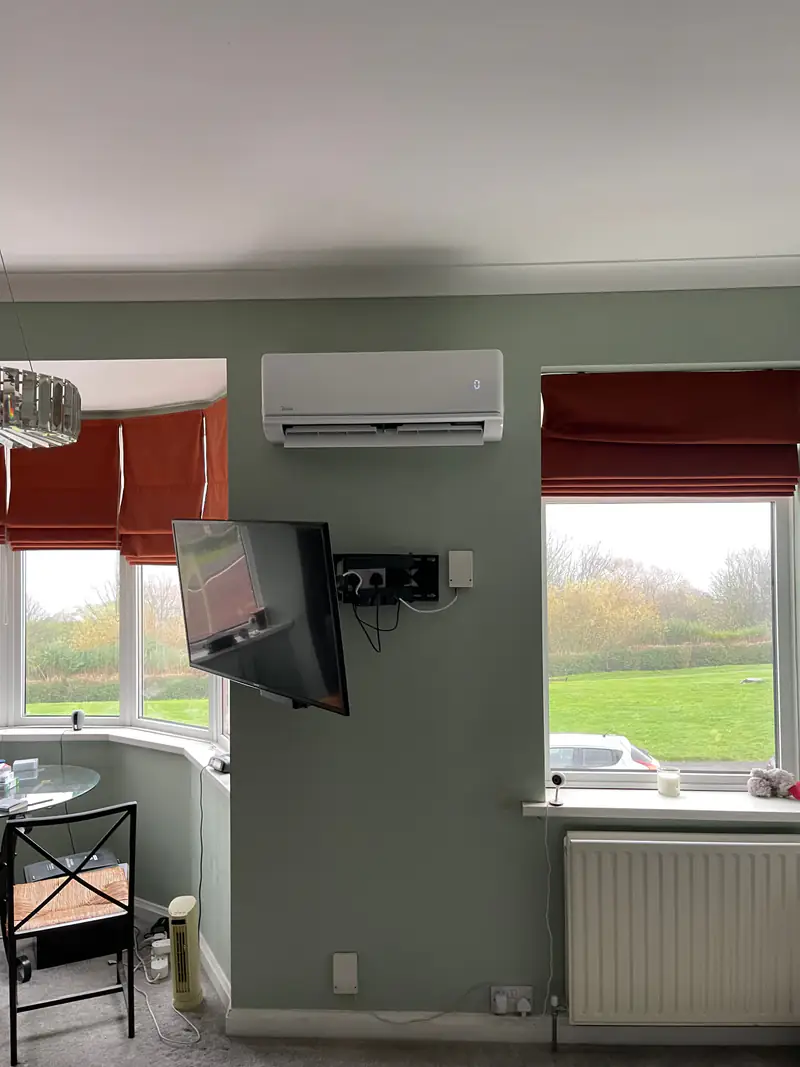
Why new-build bedrooms in Pocklington overheat
Because the things that keep heat in during winter also stop it getting out in summer. Good insulation, airtight construction and big windows trap the sun’s heat, and the upstairs rooms collect warm air rising from below.
- South- and west-facing bedrooms catch strong afternoon and evening sun
- Rooms under the roof warm up through the day and give the heat back at night
- Opening windows may not help on still, warm nights
- Trickle vents and extractor fans move very little air compared with a breeze
The simple fix
A small, quiet wall-mounted split system is usually enough to get a bedroom down to a temperature you can sleep in. For a typical bedroom that’s often around 2 to 2.5 kW of cooling. Our bedroom air conditioning page goes into sleep modes and quiet indoor units.
Home offices and study rooms
Lots of people in and around the town work from home at least part of the week, often in a small spare bedroom or a garden office. Add a computer, a couple of screens and a shut door and the room warms up fast. It’s hard to think straight in a hot room.
Spare-room studies
A compact split system sized for the room and its equipment keeps the temperature steady through long video calls.
Garden offices
Timber garden rooms can be cold in winter and hot in summer. A reverse-cycle unit deals with both, as long as the building is reasonably insulated.
Smart controls
Many units can be scheduled or run from a phone, so the room is comfortable before you sit down.
Sizing for a working day
A study needs a bit more capacity than a bedroom the same size, since a computer, two screens and a printer are adding heat for eight hours or more. At the survey we look at the equipment, which way the window faces and whether the room is under the roof. Get the size right and the unit ticks over in the background instead of blasting cold air across your desk.
Placing the indoor unit
Don’t put the unit right above the desk. On a side wall or over the door, it spreads air across the room, keeps the draught off your shoulders and leaves space for shelves.
Our office air conditioning service covers home studies as well as small offices in town.
Single split, multi-split or ducted?
It depends how many rooms you want to treat and how much building work you’re prepared to put up with.
| System | Best for | Points to consider |
|---|---|---|
| Single wall-mounted split | One bedroom, office or conservatory | Simplest and quickest install; one outdoor unit per room |
| Multi-split | Two to four rooms in the same house | One outdoor unit serves several indoor units; less outdoor clutter |
| Ceiling cassette | Shops, cafés and larger open rooms | Needs ceiling void space; spreads air evenly |
| Ducted | Whole floors or new extensions | Hidden indoor equipment; best planned during a build or refit |
We’ll go through the options at the survey and set out the trade-offs in your quote. For homes, see domestic air conditioning.
How long does a typical install take?
A single wall-mounted system is usually fitted in a day. A multi-split takes a bit longer, depending on how many rooms and how the pipes need to run. The full air conditioning installation process is explained on its own page, but this is roughly how the day goes.
Preparing the room
Dust sheets go down, and the indoor unit position is marked and checked for level, clearances and any hidden pipes or cables.
Drilling and pipework
A hole is cored through the wall for the refrigerant pipes, the cable and the condensate drain, which has to fall by gravity or use a condensate pump.
Fitting the outdoor unit
The outdoor unit goes on a base or wall bracket with anti-vibration mounts, placed for good airflow and away from neighbours’ windows.
Electrical connection
Many installations need a dedicated circuit and a local isolator, and all work must comply with the Wiring Regulations.
Testing and handover
The system is pressure tested, evacuated and run in heating and cooling modes. Then we show you the controls and how to clean the filters.
Doing more than one room? It follows the same pattern, with extra time for each additional indoor unit and its pipe run.
East Riding of Yorkshire Council and planning permission
Pocklington is in the East Riding of Yorkshire, so East Riding of Yorkshire Council is the local planning authority, the same as for Stamford Bridge. Many domestic air-to-air heat pump installations in England count as permitted development, subject to conditions. Not every property or position qualifies, though.
- Is the building listed? Consent is likely for external units and internal alterations.
- Is it in a conservation area? Outdoor units visible from the street need particular care.
- Is it a flat or leasehold property? Freeholder consent may be needed.
- Is it a commercial premises? Domestic permitted development rights don’t apply in the same way.
- On a newer estate, do your deeds include covenants about external equipment?
Good to know
We’ll point out anything at the survey that looks worth checking, but the council has the final say. If in doubt, ask them before booking the work.
Shops, cafés and small businesses in town
Trading premises in the centre run longer hours than a house, with more people, more kit and often a shopfront facing the sun. Our commercial air conditioning service sizes systems for those loads.
Retail and hospitality
In cafés and pubs, units need to sit away from food prep, and the filters want cleaning more often. Shops do well with ceiling cassettes or slim wall units that leave display walls clear.
What drives capacity
- Floor area and ceiling height
- Number of customers and staff at busy times
- Ovens, coffee machines, fridges and lighting
- Glazing, especially south- or west-facing shopfronts
Offices above shops
Upper floors trap heat from the shop below and the roof above. Where the distances work, one multi-split outdoor unit can serve both the shop floor and the rooms upstairs.
Filters, dust and seasonal servicing
There’s farmland all round the town, and summer dust and pollen can clog filters quicker than you’d think. A blocked filter cuts airflow and makes the system work harder, and it can lead to icing or water leaks.
- Filter cleaning
- You can do this yourself every few weeks when the unit is in heavy use. It takes a few minutes.
- Annual service
- Coils and fan cleaned, drain checked, electrical connections inspected, pressures and temperatures checked, and controls tested. See air conditioning servicing.
- Planned maintenance
- Scheduled visits for businesses with several units, through our air conditioning maintenance service.
Pocklington pointers before you book
A bit of homework makes the survey quicker and the quote more accurate.
- Note which rooms overheat and at what time of day
- Think about where you would and wouldn’t want an outdoor unit
- Check where your consumer unit is and whether it has spare capacity
- If the property is listed or leasehold, have the relevant documents to hand
Call 0191 743 9144 or use the contact page to book a free survey. We also work in Dunnington and the villages between here and York.